
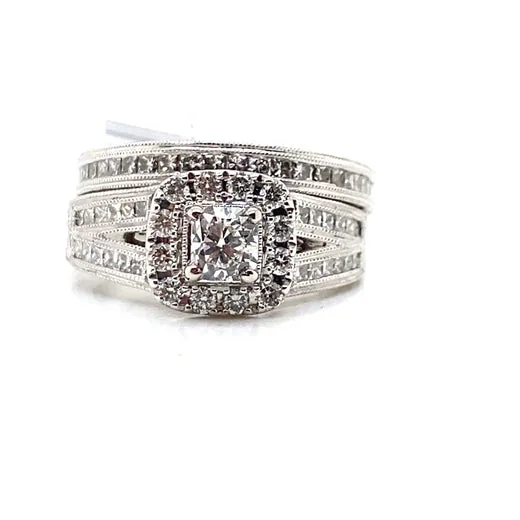
Platinum is its own metal.
A white color does not tell you whether a piece is platinum, white gold or silver. Bring it intact. Existing marks and appropriate testing help identify the material.
SDJB evaluates platinum jewelry, coins and bullion. A finished ring may need a different assessment from a plain bar.
What to look for before your visit.
Photograph any readable metal or maker’s marks and keep existing receipts or reports together. A fineness number describes parts per thousand: 950 indicates 95% of the named metal. Marks are clues to check alongside the piece.
No need to remove stones or separate a setting. That can damage the jewelry and lose information useful to its assessment.
The weight needs context.
The scale shows the weight of everything on it. Stones and other components do not become platinum because they sit in a platinum setting. Purity, metal weight, condition, design and resale demand all help explain an offer.
Jewelry, coins and bars.
For jewelry, bring the whole piece and matching parts. For coins and bars, keep packaging and certificates together. If you have a mixed collection, the team can help separate categories during evaluation.