Start with what is being weighed.
A scale measures everything placed on it. A ring’s total weight can include stones and components made from other materials. Ask whether a quoted weight describes the complete piece or the gold alloy being assessed.
Keep the measurement units consistent. Gold market prices are commonly quoted per troy ounce; one troy ounce is about 31.1035 grams. A price per ounce cannot be multiplied directly by a weight in grams.
Karat describes the gold proportion.
Gold karat is a purity measure, distinct from the carat weight of a gemstone. In nominal terms, 18K is 18 parts gold out of 24, or 75%; 14K is about 58.3%. A mark is a useful starting clue, not a substitute for checking the piece.
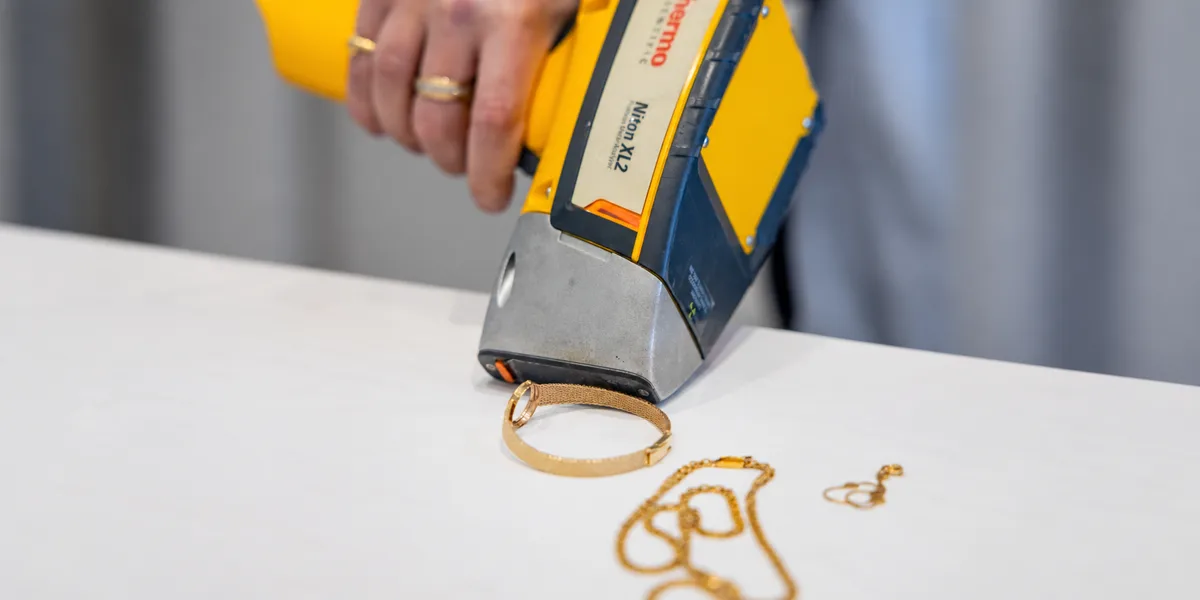
Gold-plated and gold-filled pieces have a different construction from solid gold alloy. Color alone does not establish purity. Ask how the team assessed the metal and whether different components were checked separately.
An example of content, not a price.
Imagine 12 grams of verified 18K gold alloy, with no stones or other materials included in that weight. The nominal fine-gold content is 12 × 18 ÷ 24 = 9 grams. Multiplying those 9 grams by a consistent per-gram gold reference price gives a theoretical metal benchmark.
That calculation is not a purchase offer or a loan amount. It does not establish authenticity, recovery costs, resale demand or the value of any stones. It is a way to understand one part of an explanation.
Look at the piece before treating it as scrap.
A signed bracelet, an antique ring or a piece with valuable stones may need a different assessment from broken, unbranded metal. Ask what is driving the offer: the materials, the complete piece, or a combination.
A retail receipt or insurance replacement appraisal answers a different question from a current purchase offer. A GIA grading report describes gem characteristics; it is not a monetary appraisal.
Leave with an explanation you understand.
- What weight and purity were used, and in which units?
- How were stones and non-gold components handled?
- Was the complete piece considered for resale?
- Is this a purchase offer or a separate loan assessment?
- What remains to be verified before an offer is final?
Bring pieces intact, with any records you already have. There is no need to buy an appraisal, polish a piece or remove stones before asking the team what would help.
Take the next step with your piece.
Sources & review
Original preparation guidance informed by SDJB’s published buying information and its evaluation process, checked October 22, 2026. Acceptance and offers depend on your actual item and the transaction requirements.
Further reading: FTC: gold jewelry markings; World Gold Council: weight and purity; GIA: grading reports and appraisals.
Browse all guides