
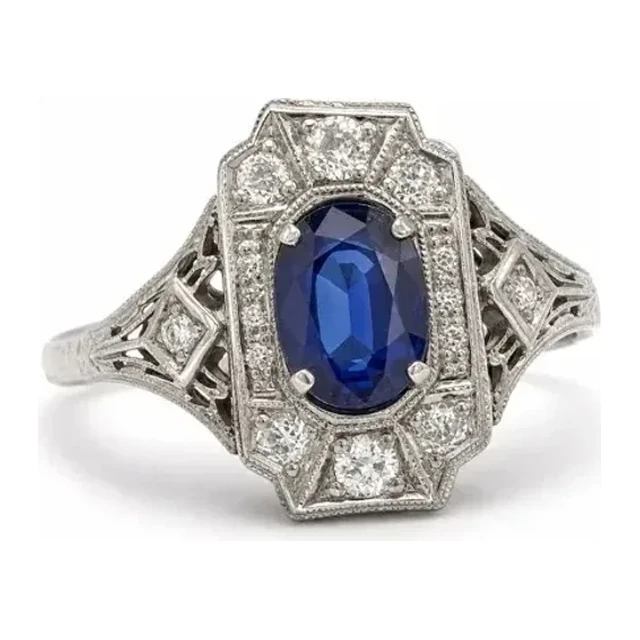
Describe what you know.
You can start with “a ring with a green stone.” Color alone does not identify a gemstone. Share any existing laboratory report, receipt or appraisal, plus known repairs or damage.
Look at stone and setting together.
Identity, size, condition and treatment information can matter for a colored stone. The metal, maker and construction also affect the complete jewel. Keep stones in their settings until a specialist has examined them.
Useful photos and documents.
- The complete piece in ordinary light.
- Readable marks inside a ring or near a clasp.
- Existing reports, including their identifying numbers.
- Visible chips, wear or past repairs you already know about.
Photos help start the conversation; the in-person examination answers questions they cannot.
A loose stone or an unfamiliar material?
Ask the SDJB team about it before making a special trip. They can explain what information would help and whether independent laboratory work is useful. You do not need to buy a new report just to start an inquiry.