The useful question isn’t only “What is it worth?” It’s “What went into this offer?” A good evaluation gives you the reasoning to discuss.
First, identify what you have.
Two pieces that look similar can have different materials, makers or construction. Marks, signatures, serial numbers and documentation can help establish identity. Inspection adds information a photograph may not show.
For watches, originality and condition matter. For a signed piece of jewelry, the maker and design can be relevant alongside its gold or diamonds.
Understand the materials.
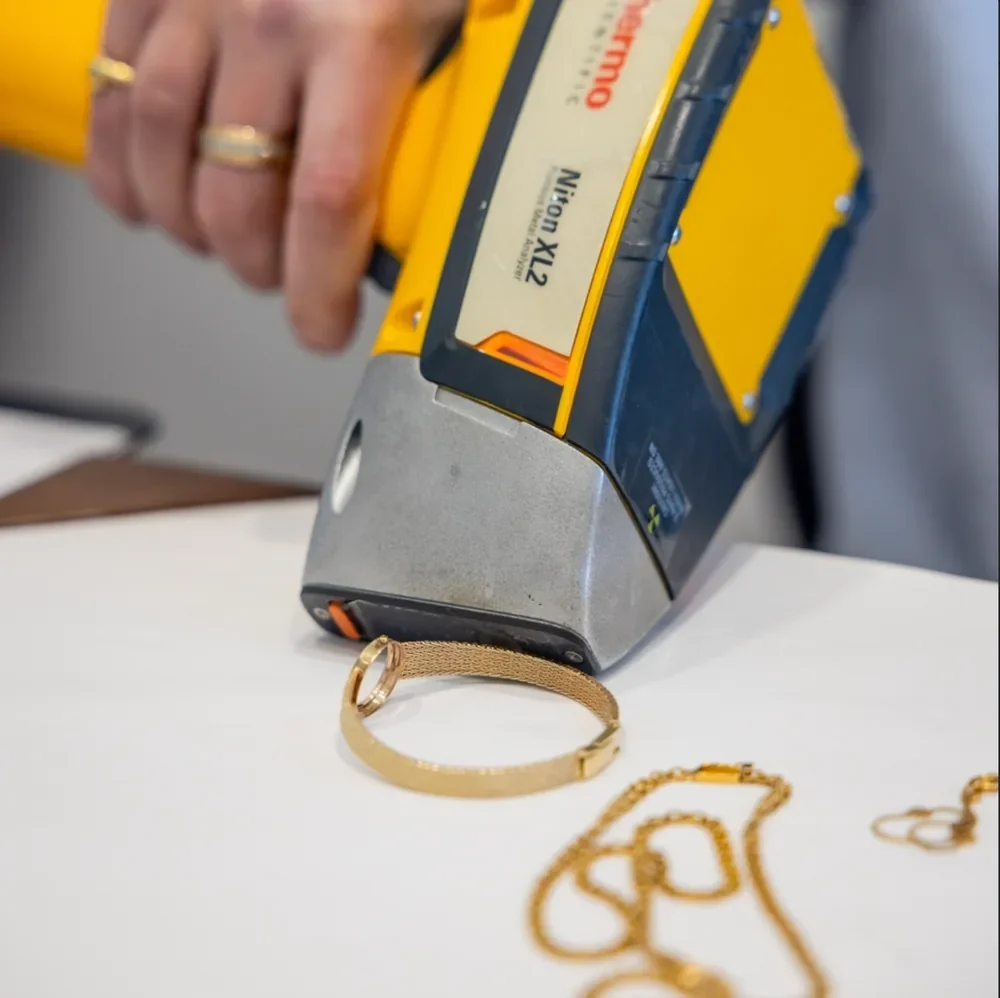
Gold purity describes how much gold is in an alloy. Weight needs context: a scale may include stones, settings and non-gold components. Diamonds and other gemstones need their own evaluation.
For example, two chains with the same total weight but different gold purity do not contain the same amount of gold. A designer piece may also have resale considerations that a metal-only calculation misses.
See our gold-selling guide Selling a diamond? See what mattersLook at the market for that item.
A listed retail price is not proof that a similar piece sold for that amount. Condition, demand, likely resale channel and work required can affect a buyer’s offer.
Metal prices also move. Ask when an estimate was prepared and what would need to be confirmed before it becomes a final offer.
A purchase offer and an appraisal serve different purposes.
Purchase offer
The amount a buyer is prepared to pay for your piece, subject to the stated conditions.
Insurance appraisal
A valuation prepared for an insurance purpose, often focused on retail replacement. It is not a promise of a cash offer.
You don’t need to solve it before you visit.
Bring your piece and any documents you already have. Keep certificates, receipts, watch boxes and papers together where possible. At SDJB, bring valid government-issued photo ID for your transaction.
If you don’t know the maker, purity or value, say so. That’s a normal place to start.
- Ask what the buyer identified.
- Ask which factors affected the amount.
- Ask about your options if you aren’t ready to sell.
Ready to talk about your piece?
Start with an inquiry, or explore the San Diego store.
Explore jewelry, diamond and watch buying →
Considering borrowing instead? Understand collateral loans →